A Major Step Forward for Vietnam’s Shipbuilding Industry
The transition from contract manufacturing to mastering shipbuilding technology and increasing added value is no easy task, requiring businesses to embrace innovation alongside comprehensive, well-coordinated, and long-term industrial development policies.
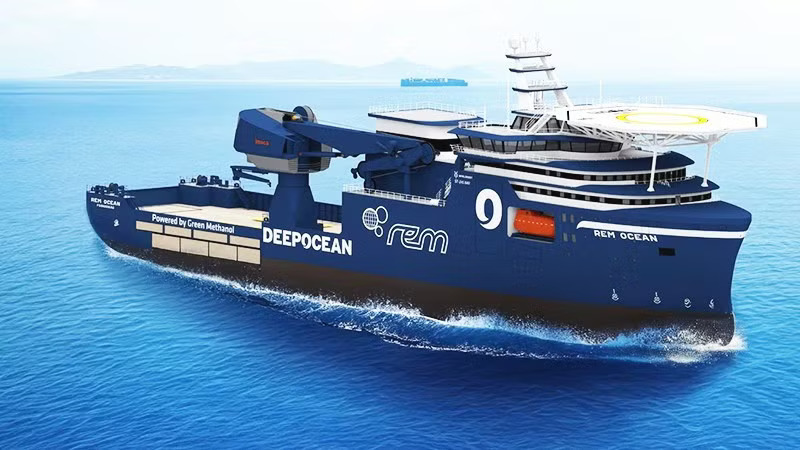
The hull of the Rem Pioneer was built at Song Cam Shipbuilding Joint Stock Company.
Vietnam’s Mark on an Award-Winning Vessel
On September 1, 2026, at the SMM International Maritime Trade Fair in Hamburg, Germany, the offshore service vessel Rem Pioneer received the Ship of the Year 2026 award, presented by the Norwegian maritime magazine Skipsrevyen. The award honored shipowner REM Offshore, design company Skipsteknisk, and shipyard Myklebust Verft for their technological innovations and energy efficiency achievements. Notably, Song Cam Shipbuilding Joint Stock Company in Hai Phong, Vietnam, also played a significant role in this success, having been responsible for constructing the vessel’s 116.5-meter-long hull.
Rem Pioneer is designed to support offshore wind energy projects, oil and gas operations, and subsea activities. The vessel features a spacious 1,400 m² working deck, a 250-ton electric crane, and a dual-fuel propulsion system capable of operating on methanol. Its fuel consumption is expected to be 30–50% lower than that of comparable vessels powered by conventional marine fuels.
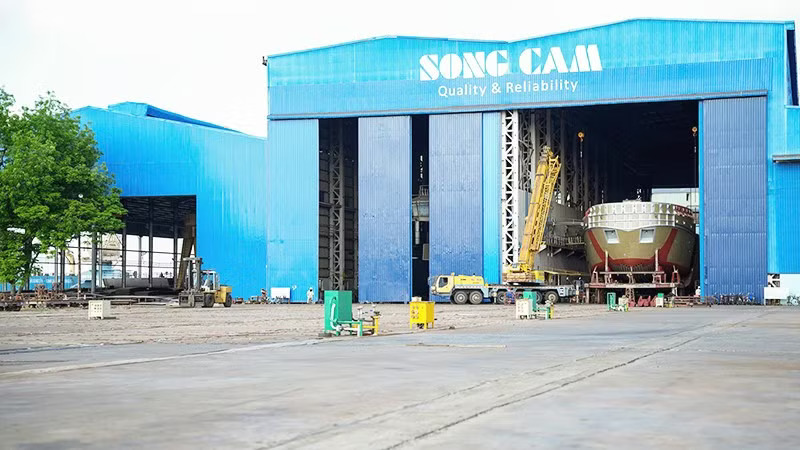
In 2025, Song Cam delivered 38 newly built vessels, generating revenue of VND 1.373 trillion.
In October 2024, Song Cam began constructing the vessel’s hull under the supervision of the international classification society DNV. On June 27, 2025, the hull was launched in Hai Phong, one month ahead of schedule. Explaining the decision to select a Vietnamese partner, Leiv Sindre Muren, CEO of Myklebust Verft, said that amid growing pressure on steel fabrication capacity in Europe, Myklebust had sought international partners to meet its production requirements. Although geographical distance and cultural differences posed challenges, the results proved that the decision was the right one. The hull was of excellent quality, with highly precise lines and minimal warping or deformation.
The Norwegian partner’s assessment demonstrates that the technical expertise and workmanship of Song Cam’s engineers and workers have met the stringent standards of the international shipbuilding industry. This capability has been developed through a deliberate strategy of choosing the right market segments. While many domestic shipbuilders have focused on large-tonnage vessels, Song Cam has proactively developed its export-oriented portfolio of tugboats, workboats, and specialized vessels. Notable examples include Sparky, an electric tugboat recognized by TIME magazine as one of the Best Inventions of 2022, followed by Volta 1, an electric tugboat built to serve the Port of Antwerp-Bruges in Belgium.
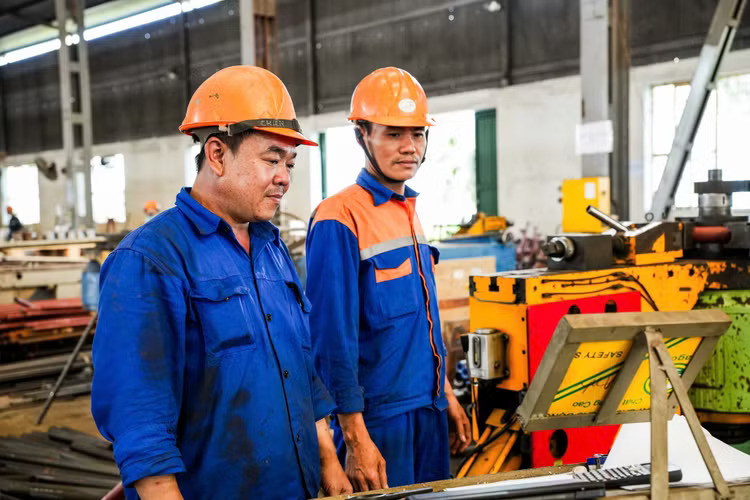
Innovating technology and enhancing workforce quality to stay ahead of global shipbuilding demand.
Increasing Added Value and Building Sustainable Competitiveness
Song Cam’s success in the Rem Pioneer project demonstrates that Vietnamese enterprises are capable of meeting the stringent requirements of the international shipbuilding market. However, it must be acknowledged that much of the value of modern vessels lies in their design, propulsion systems, control equipment, integrated technologies, and technical services. These are also areas in which Vietnam’s shipbuilding industry needs to gradually strengthen its capabilities.
This issue is particularly significant as the draft Vietnam Maritime and Inland Waterways Code, expected to be submitted to the National Assembly for consideration at the second session of its 16th tenure, includes a dedicated chapter on the maritime industry. Under the draft, shipbuilding is identified as a priority sector. In particular, the proposed development strategy, which focuses on value chains and product life cycles while establishing domestic supply chains covering vessel design, shipbuilding, and the production of materials, machinery, equipment, and technologies, reflects a more comprehensive approach to developing the industry.
Pham Hoai Chung, Secretary of the Party Committee and Chairman of the Members’ Council of the Shipbuilding Industry Corporation (SBIC), noted that Song Cam’s focus on specialized vessels also offers a promising direction for Vietnam’s shipbuilding industry, particularly as the energy transition drives demand for vessels serving offshore wind power projects and specialized maritime operations. To seize these opportunities, enterprises must invest in technology, develop highly skilled human resources, and strengthen international cooperation. The competitive advantage of Vietnam’s shipbuilding industry does not necessarily lie in building the largest vessels, but rather in its ability to deliver high-quality, highly specialized products that meet specific market demands.
Le Do Muoi, Director General of the Vietnam Maritime and Inland Waterways Administration, emphasized: “The draft Code aims to establish an institutional foundation for developing the maritime industry along the value chain. Support policies are intended not only to expand production capacity but, more importantly, to encourage enterprises to make substantial investments, master technology, increase added value, and raise the localization rate. Against the backdrop of the energy transition and increasingly stringent emission reduction requirements, this also presents an opportunity for Vietnam’s shipbuilding industry to develop specialized vessels and clean-energy-powered ships, enabling deeper participation in global value chains.”
The story of Song Cam highlights that the opportunities for Vietnam’s shipbuilding industry lie in progressively mastering technology, increasing domestic content, and generating greater added value. To ensure that Vietnam’s contribution to modern vessels extends beyond hull construction, a major transformation is needed in both enterprise capabilities and industrial development policies.
Source: https://nhandan.vn/buoc-tien-cua-nganh-dong-tau-post998093.html
Related Posts

16-08-2018
Tài liệu họp Đại hội cổ đông thường niên năm 2018
Tài liệu họp Đại hội cổ đông thường niên năm 2018

16-08-2018
Tổ chức thành công Đại hội đồng cổ đông thường niên năm 2018
Tổ chức thành công Đại hội đồng cổ đông thường niên năm 2018